Your first family photographs after becoming a blended family can carry more pressure than anyone says aloud.
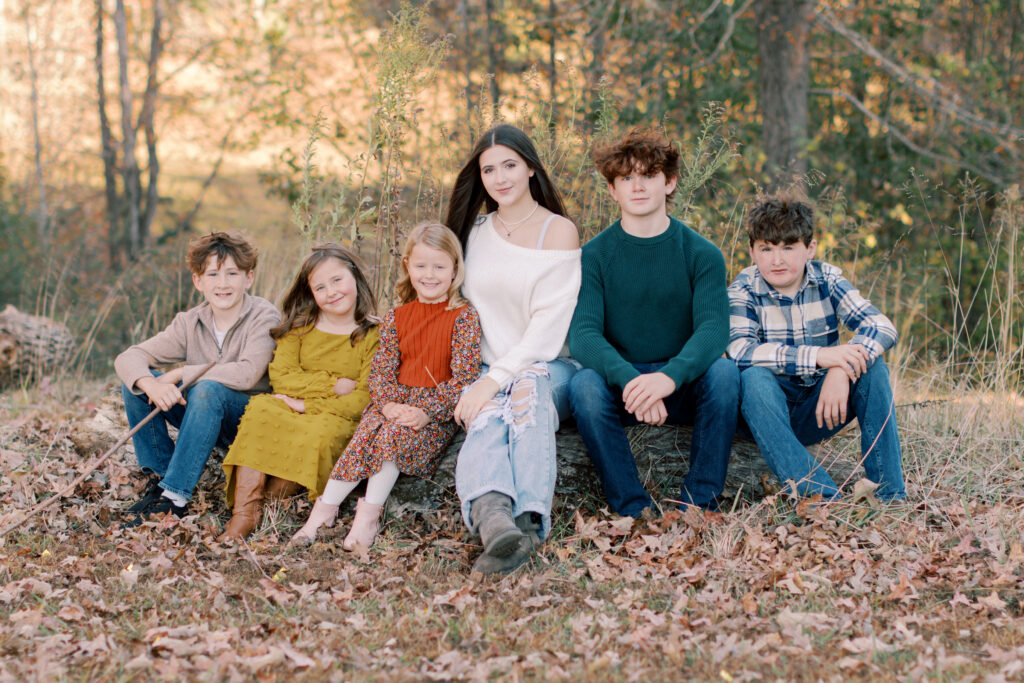
You want a portrait of everyone together. At the same time, you may wonder whether certain groupings will feel awkward, whether the older children will participate willingly, or whether photographing established sibling relationships separately somehow works against the idea of becoming one family.
It does not.
A thoughtful blended-family photo session does not require every relationship to have the same history or look equally affectionate. The goal is to include the entire family while leaving room for the people and relationships that already exist within it.
The photographs do not have to prove that you are a family
A first blended-family session can begin to feel uncomfortable when too much meaning is placed on it.
The photographs do not need to announce that everyone adjusted immediately, that every sibling relationship is identical, or that no one feels uncertain. They simply need to show the family as it is now.
That distinction matters.
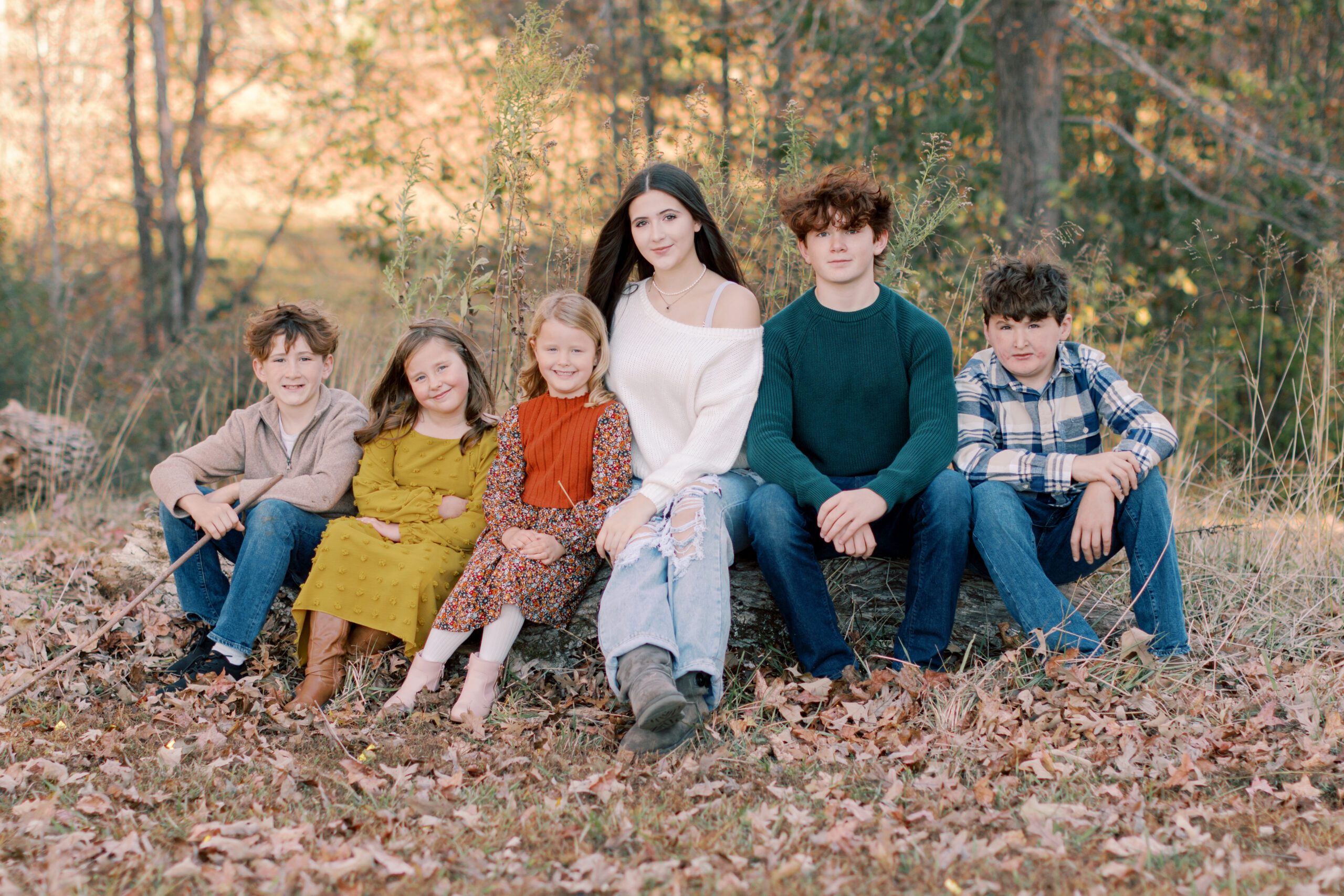
During the Kuba family’s November session at White Oak Park, I photographed the entire family together, but I did not expect one group portrait to carry the full weight of the session. We also made photographs of the children, smaller sibling groupings, each parent with children, the couple, and individual portraits.
The complete family portrait matters. It just does not have to do all the work.
Tell your photographer enough to understand the relationships
You do not need to provide a detailed family history, but your photographer should know enough to avoid careless assumptions.
Before the session, it can help to explain:
- Whether this is the first session with everyone together
- Which children are siblings
- Whether certain children have especially close relationships
- Whether anyone is apprehensive about participating
- Which groupings are important to you
- Whether there are combinations you would prefer not to emphasize
This information should be treated as practical context, not material for public discussion.
Knowing how people are connected helps a photographer move through the session sensitively. It prevents the adults from having to explain relationships in front of everyone while photographs are already underway. It also makes it easier to include meaningful combinations without labeling them aloud.
Established relationships do not threaten the new family
One of the most common uncertainties is whether photographing children in their established sibling groups will make the family appear divided.
Handled thoughtfully, it does the opposite.
A blended family is made from relationships that did not all begin at the same time. There is no reason to conceal that. Photographing siblings who have grown up together does not exclude anyone else, particularly when the session also includes the full family and other combinations.
The important thing is balance.
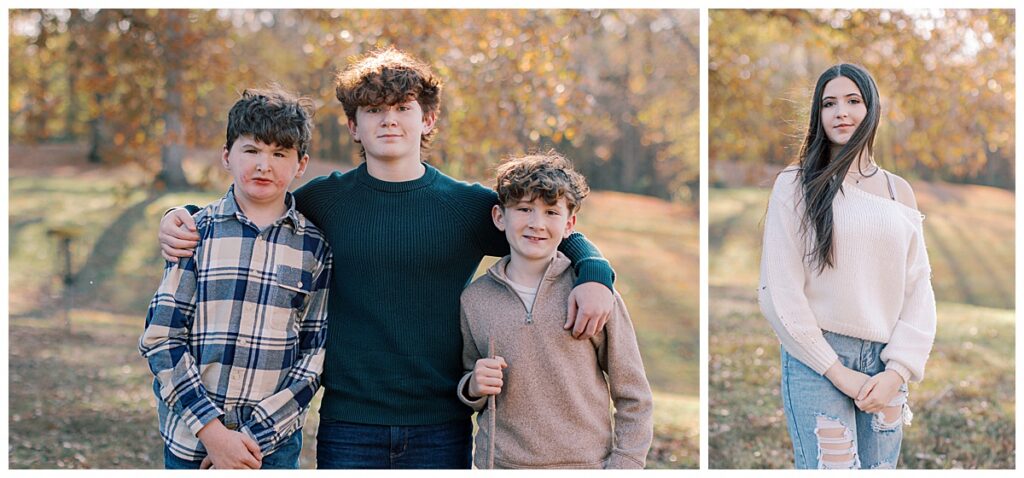
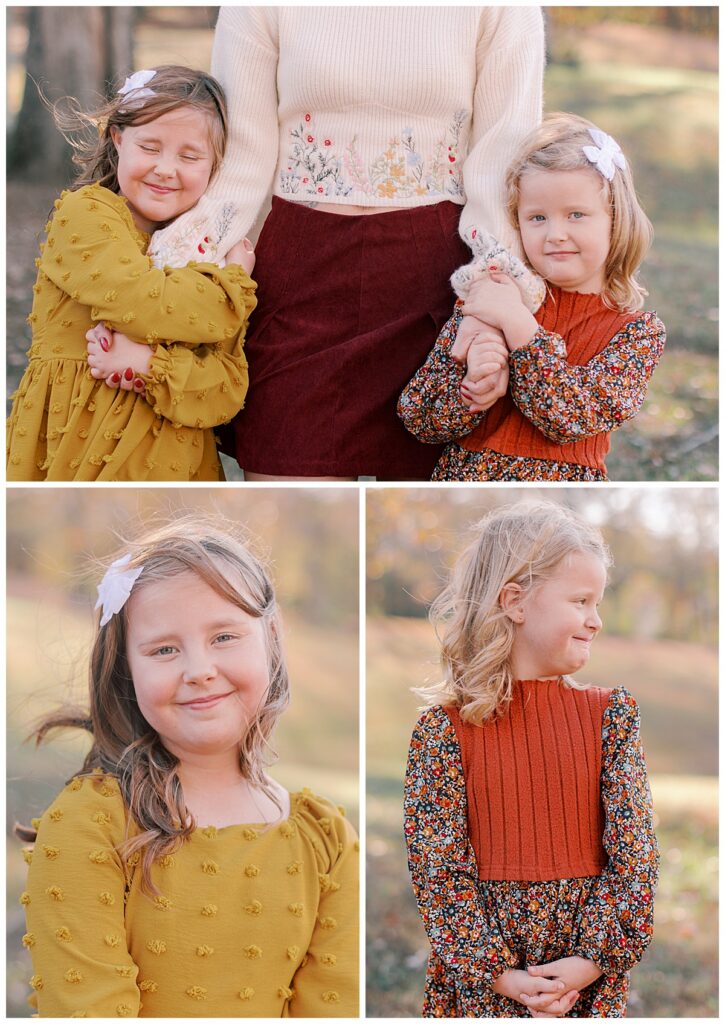
In this session, existing sibling relationships informed several of the smaller groupings, but those groupings were only part of the gallery. All six children were photographed together as well. The younger girls had their own photographs. The boys were photographed with their father and with one another. The older children were given space together. Every child also had the opportunity to be seen as an individual.
The result is not a set of competing family units. It is a fuller account of the people within one family.
Every child should have a place beyond the group portrait
Large-family photographs present a basic compositional problem: once eight people are arranged together, individual personalities can become visually quiet.
That is one reason I make individual portraits and smaller combinations intentionally. A child should not leave a family session as merely the fourth person from the left.
Individual photographs are especially valuable when the children span several ages. A six-year-old and an eighteen-year-old do not occupy the same season of life. They do not need the same direction, the same amount of movement, or the same type of portrait.
The younger children in this session could lean into playfulness and physical closeness. The older children needed cleaner direction and more personal space. The goal was not to make them all respond in the same way. It was to photograph each of them well.
Coordinate the wardrobe without erasing everyone’s identity
Dressing a family of eight can become complicated quickly. Matching everyone usually makes it worse.
For the Kubas, the wardrobe worked because the clothing shared an autumn palette without looking like a uniform. Cream, denim, rust, mustard, forest green, brown, and muted plaid appeared throughout the group. Texture came through sweaters, corduroy, florals, knits, denim, and boots.
The clothes belonged together, but the people remained distinct.
That is particularly important for blended families and older children. Clothing is one of the simplest ways to let everyone maintain some ownership of how they appear.
A practical method is to:
- Choose two or three grounding colors.
- Add several related autumnal or neutral shades.
- Repeat colors quietly rather than assigning everyone the same one.
- Mix texture and restrained patterns.
- Let older children choose within the established palette.
- Check the complete group before purchasing anything new.
The purpose of wardrobe guidance is visual order, not sameness.
A large family session does not necessarily require several hours
This session took approximately 30 minutes.
That was enough time to photograph eight people in multiple combinations because we stayed in one versatile area, the light was chosen intentionally, and the transitions between groupings were efficient.
That does not mean every family of eight should automatically book the shortest available session. Young children, mobility concerns, multiple outfit changes, or a family that needs more time to settle in may require a longer pace.
However, a large family does not always need an elaborate production.
Experience matters here. After photographing Katherine and her girls for about 11 years, I already knew part of the family. I also did not need to stop and build a detailed plan for every grouping. I could watch how everyone stood together, see which combinations were working, and make decisions as we went.
A well-run session may feel relaxed to the family precisely because the photographer is making many quiet decisions quickly.
Why one location was enough
White Oak Park gave us open ground for the full family portrait, wooded edges for smaller combinations, a fallen log for seated groupings, and enough variation in the landscape to keep the gallery from feeling repetitive.
More importantly, those spaces were close together.
Moving six children and two adults repeatedly between distant locations would have used time without necessarily improving the photographs. By staying within one area, we could change the scale and composition while keeping the session moving.
The November landscape also worked with the wardrobe. Warm leaves, softened grass, bare woodland texture, and low sunset light supported the creams, rusts, greens, denim, and brown without swallowing the family in heavy autumn color.
A good location is not simply attractive. It needs to make the session easier.
The couple still belongs in the photographs
Parents sometimes hesitate to request photographs of themselves during a family session, particularly when the primary purpose is documenting the children together.
For a newly blended family, the couple is part of the reason everyone is standing in the same photograph.
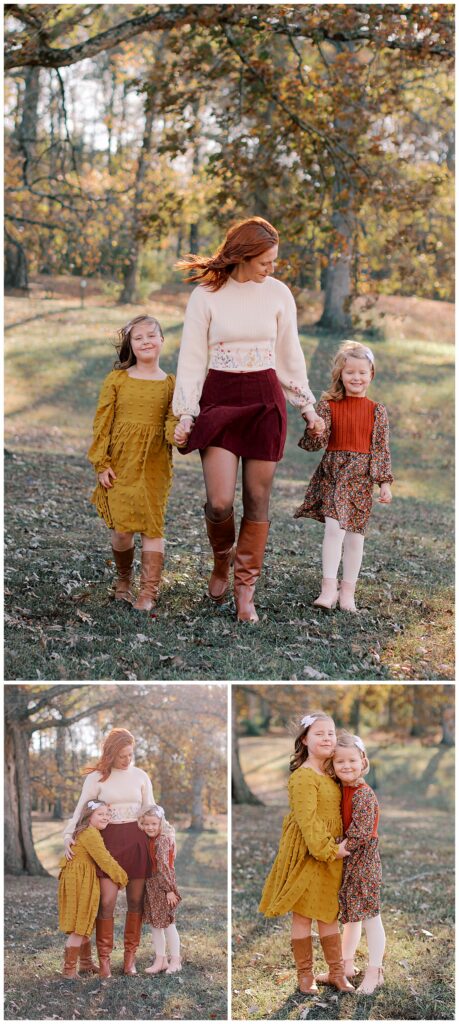
That does not mean the session should feel like an engagement session. A few quiet portraits of the couple provide context and balance. They also create photographs that are about their relationship, not only their work as parents.
Katherine and her husband did not need elaborate posing. Walking together, standing closely, and allowing a little conversation gave us enough movement to create portraits that felt natural to them.
Your first blended-family photographs are allowed to be honest
The session does not have to erase the family’s earlier chapters.
It does not have to persuade anyone that every relationship formed at once. It does not have to produce identical expressions, matching clothes, or a carefully manufactured display of closeness.
The most useful approach is simpler:
Photograph everyone together. Honor the smaller relationships. Give each child individual attention. Allow teenagers to maintain their composure. Include the couple. Keep the direction calm. Let the family look like people rather than evidence.
The Kuba family’s first session together worked because no single photograph was asked to explain the whole family. Together, the photographs do a better job.





Frequently Asked Questions
Should every child be included in every blended-family photograph?
No. The full family should be photographed together, but smaller sibling groups, individual children, parent-and-child combinations, and couple portraits create a more complete gallery. Excluding every smaller grouping in the name of fairness usually makes the session less meaningful, not more inclusive.
Do I need to explain which children are biologically related?
Only privately, and only as much as your photographer needs to understand the desired groupings. You should not be asked to explain personal family details publicly or repeatedly during the session.
What if one of the teenagers does not want to participate?
Tell your photographer beforehand. An experienced photographer can work efficiently, avoid forced affection, and create a strong portrait without demanding exaggerated enthusiasm. A teenager does not need to appear delighted in every frame to be photographed well.
Will separate sibling photographs make the family look divided?
Not when they are part of a balanced gallery. Existing sibling relationships remain meaningful after a family blends. Those photographs can sit comfortably beside portraits of all the children and the whole family.
What should a blended family wear for pictures?
Choose a shared palette rather than matching outfits. Repeat a few colors across the group, mix textures, limit competing patterns, and allow each person some control over what they wear. Cohesion should not require everyone to look interchangeable.
How long does a blended-family photo session take?
The Kuba family’s session took about 30 minutes, but the right length depends on the number and ages of the children, the location, mobility, outfit changes, and how quickly the group settles in. Efficiency should never mean rushing people who need more time.
Planning Your Family Session
Your family does not need to arrive knowing where to stand, which combinations to request, or how to make the experience feel natural. That is part of my work.
I photograph families throughout Dallas, Paulding County, Northwest Georgia, and Metro Atlanta with an approach that leaves room for real personalities and real relationships.


add a comment
+ COMMENTS