

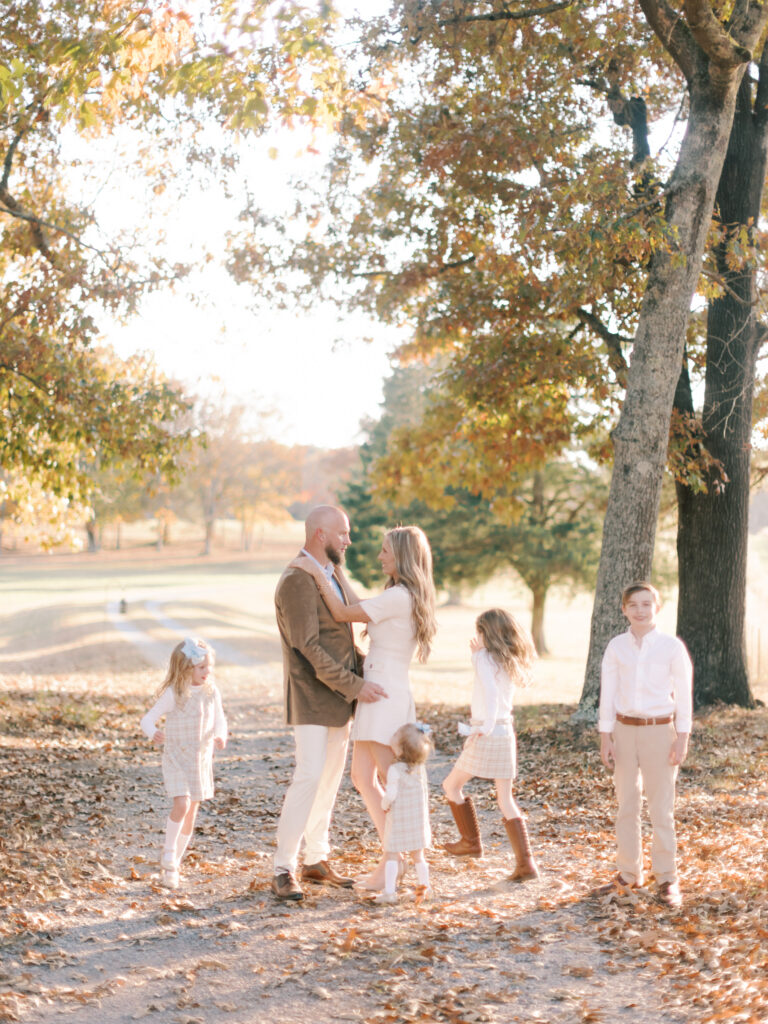
Most people who tell me they are awkward in photographs are not awkward people at all.
They are ordinary adults who have suddenly become aware of their posture, their smile, the camera, the children, whether everyone is cooperating, and the hand that no longer seems to belong naturally anywhere on their body.
That is quite a lot to manage while trying to look relaxed.
Families who look natural in photographs do not necessarily arrive knowing what to do. They have usually been given clear direction that feels comfortable, specific, and appropriate for them.
Natural-looking family photographs are rarely accidental. They are thoughtfully arranged and then given enough room to breathe.
Why “Just Act Natural” Doesn’t Work for Family Photos
“Just act natural” is not useful direction.
Natural doing what?
Should you look at the camera? Look at your husband? Walk somewhere? Laugh for no apparent reason? Attempt to appear deeply interested in a field you have never visited before?
People become more comfortable when they understand what is being asked of them. Good direction gives a family somewhere clear to begin without controlling every expression or movement.
I may place you where the light is most flattering, adjust the spacing between family members, give someone a better place for a hand, or ask you to move in a particular way. Once those pieces are working, I can pay attention to what happens between you.
The direction creates the structure. Your family brings the life.
Natural Does Not Mean Completely Unposed
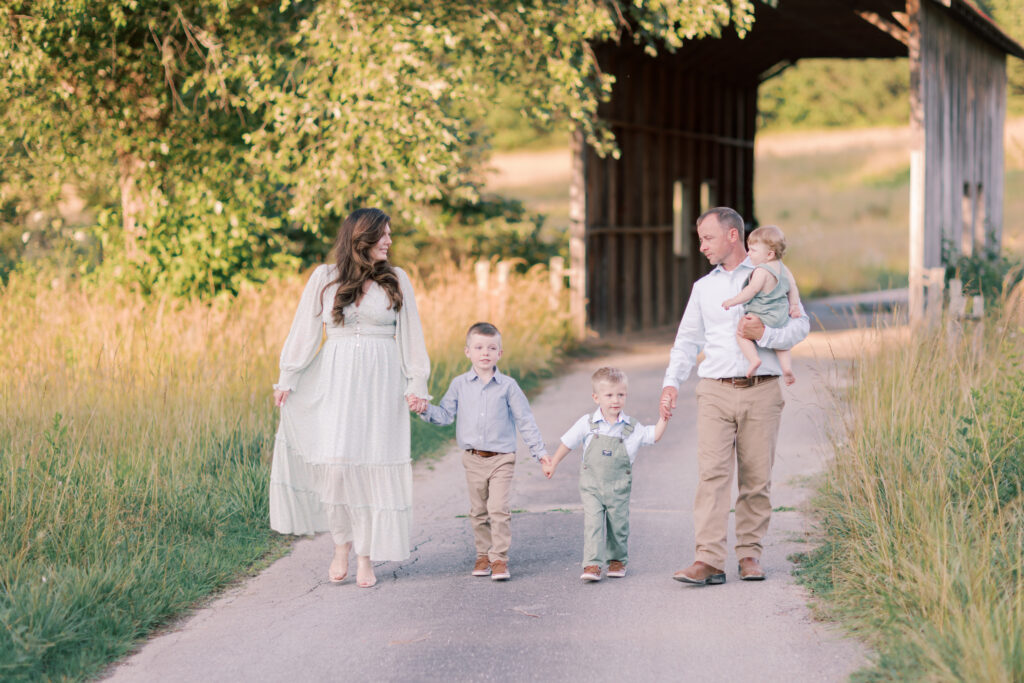
There is a common belief that posed photographs are stiff and candid photographs are natural. It is not that simple.
A photograph can be technically candid and still feel disconnected. Everyone may be moving, but no one is meaningfully engaged with anyone else.
A deliberately arranged portrait can also feel completely natural because the people inside it still look like themselves.
The goal is not to eliminate posing. It is to keep the pose from becoming more important than the family.
I want to notice how a child naturally settles into her mother, which parent a toddler reaches for first, whether older children respond better to humor than affection, and whether a family needs more movement or more structure.
The same direction will not work equally well for every family. It should not.
Specific Direction Helps People Look Natural
Most people are not accustomed to standing in a field and smiling at one another. Asking them to do it repeatedly does not make the situation feel more natural. It only gives them more time to wonder whether they are doing it correctly.
Giving people something specific to do helps.
Walking together, drawing closer, talking to a child, playing a small game, or responding to a clear prompt shifts the attention away from performing for the camera.
The important word is specific.
“Have fun” is vague.
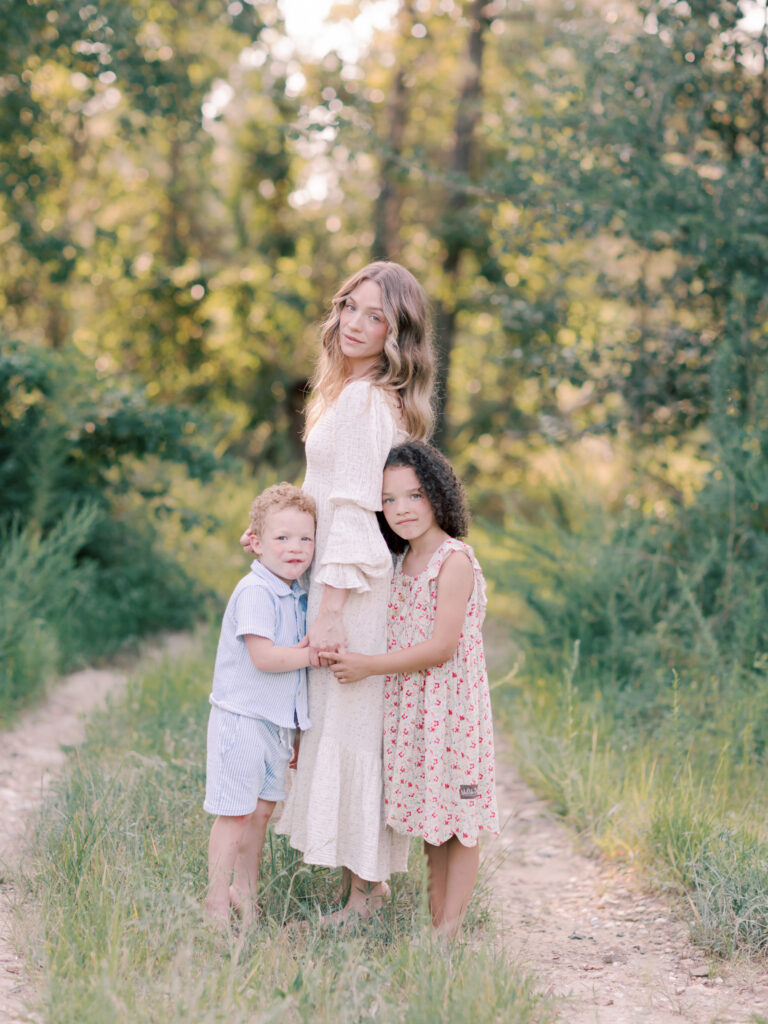
“Walk slowly together and keep your youngest child between you” gives the family an action.
“Laugh” asks people to manufacture an emotion.
“Tell him what he did this morning that nearly made you lose your religion” has a much better chance of producing a real response.
The prompt itself is not the photograph. It simply creates the conditions in which something honest can happen.
Children Do Not Need to Perform for the Camera
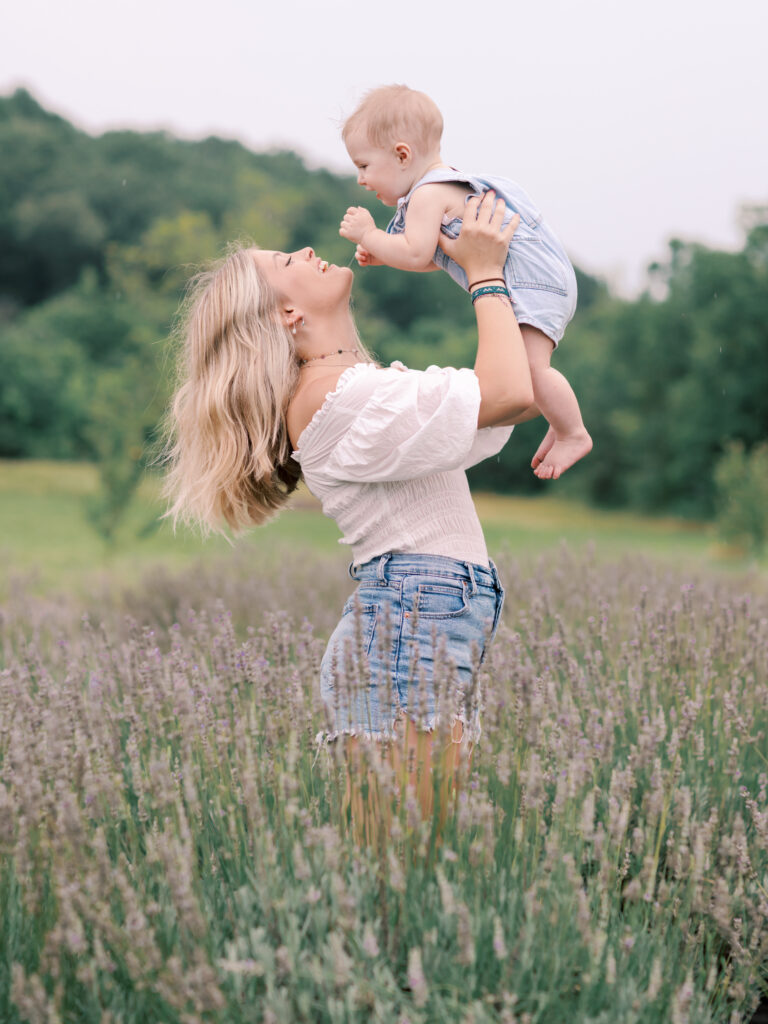
Parents often worry that their children will not cooperate. Usually, they mean their children may not stand still, smile on command, or follow adult instructions for an extended period.
Those are reasonable concerns. They are also fairly ordinary descriptions of children.
A successful family session should not depend on a young child behaving like a very small corporate employee.
Some children engage immediately. Others need time to inspect the location, remain close to a parent, or decide what they think about the person with the camera. Some need movement. Some prefer a clear job. Others need the session to become quieter.
My responsibility is to notice those differences and adjust.
If a child needs space, increasing the pressure rarely helps. If a child needs structure, endless freedom may not help either. The session has to respond to the child who is actually there, not an imaginary version who follows every instruction and smiles precisely when asked.
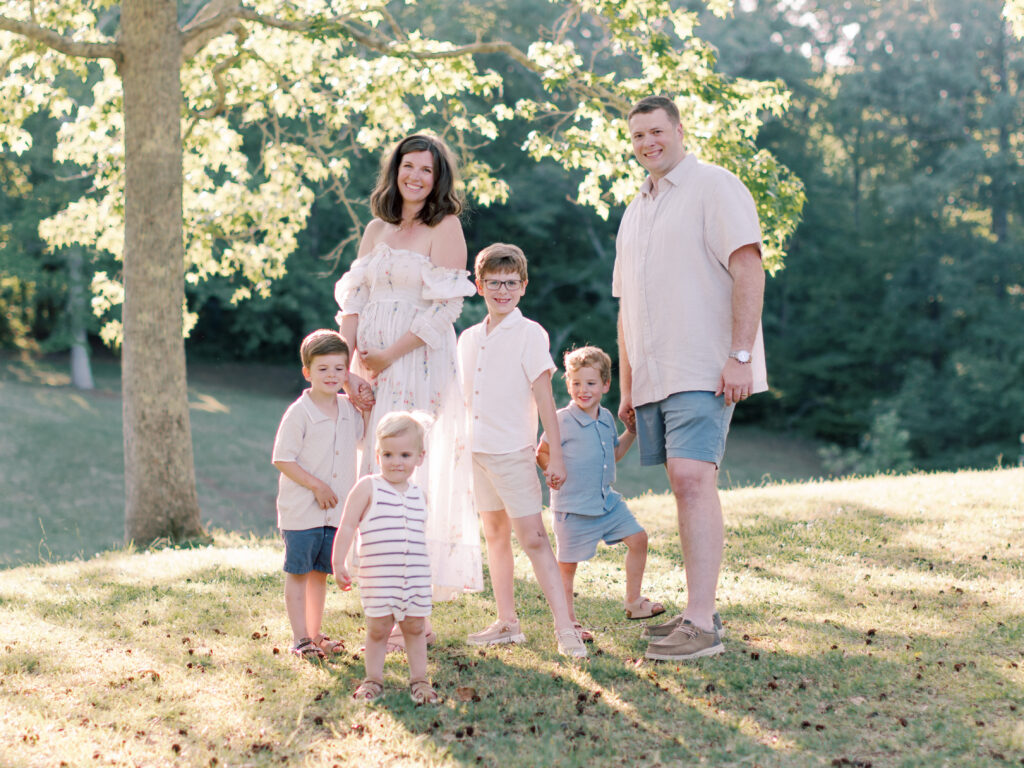
Parents Can Help by Remaining Parents
Children pay close attention to their parents, especially in an unfamiliar situation.
If every movement is followed by “look at the camera,” “smile,” “stand still,” or “please cooperate,” the session can quickly begin to feel like a test.
Parents do not have to manage every second. One of the most helpful things they can do is remain connected to their children and allow me to handle the photography.
That does not mean abandoning all expectations. It means understanding that a child looking away, moving, or needing a moment is not evidence that the session is failing.
Sometimes the photograph is developing before the parent realizes it.
If this is the kind of guidance your family needs, you can view my family photography session information and see how the experience is structured.
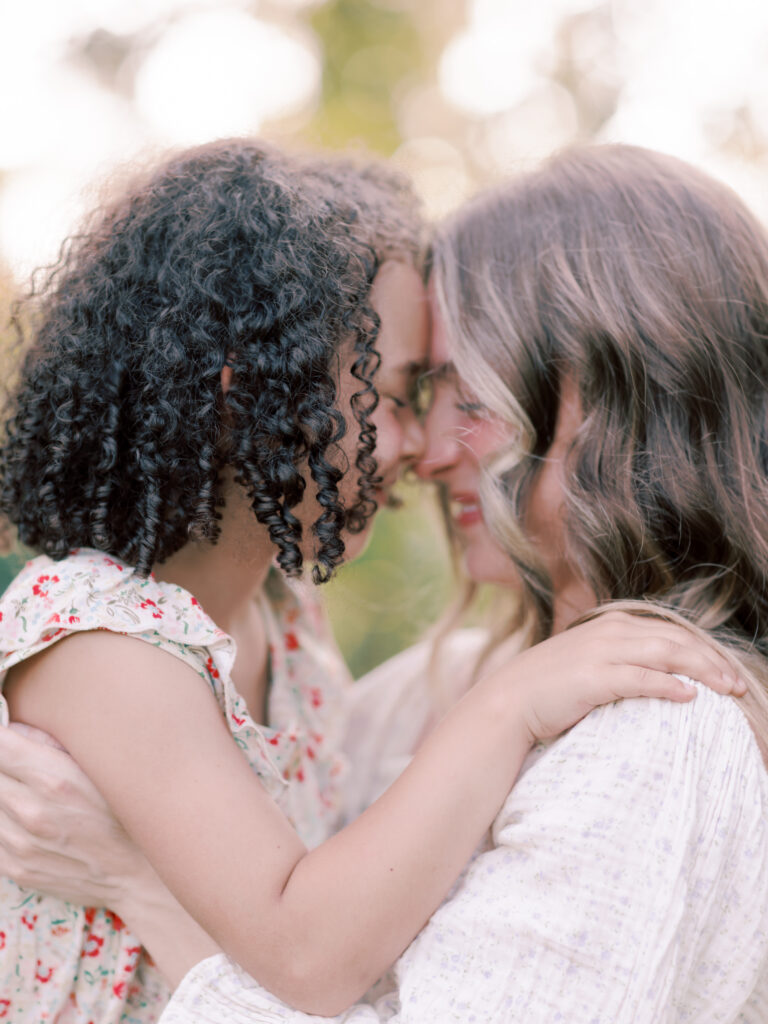
Genuine Emotion Is Only Part of a Strong Photograph
A real laugh does not automatically make a strong photograph.
Family photography still depends on light, composition, posture, perspective, clothing, spacing, and timing. I have to watch the interaction while also noticing the visual details clients should not have to manage themselves.
Has someone’s face disappeared behind another person? Is a hand pressing awkwardly against a body? Is the light emphasizing something it should soften? Has an affectionate moment become visually cluttered?
Correcting those things does not make a photograph less honest. It allows the honest part to be seen more clearly.
The work is not simply to make people interact. It is to recognize the fraction of a second that holds both the feeling and the form.
Good Direction Also Knows When to Stop
Too little direction leaves people wondering what to do. Too much direction makes them more concerned with following instructions than being together.
There comes a point when the light is right, the arrangement is working, and the family is engaged. At that point, I need to be quiet.
Sometimes I direct a great deal. Sometimes I make one small adjustment and leave everyone alone. The amount of direction should depend on the people, not on a list of poses I intend to repeat with every family.
Knowing when a moment needs help and when it simply needs time is one of the least visible parts of this work. It is also one of the most important.
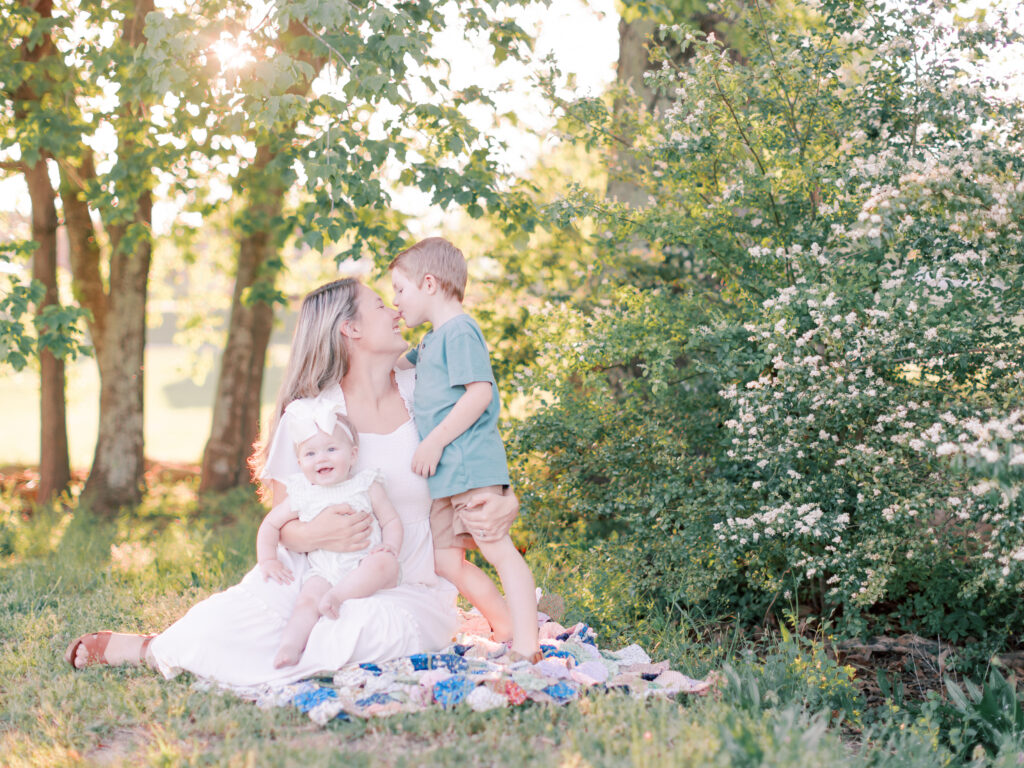
What If Your Family Really Does Feel Awkward?
You may feel awkward at first. That is not a disaster, and it does not determine how the final photographs will look.
Most people need a few minutes to settle in. Adults are learning how I communicate. Children are deciding whether any of this is worth their attention. Everyone is doing something they do not ordinarily do.
I do not expect you to arrive already knowing how to be photographed. Knowing how to photograph you is my responsibility.
Your part is much simpler:
- Wear something you can move in comfortably.
- Arrive without expecting your children to perform.
- Stay engaged with the people you came with.
- Be open to direction.
- Allow the first few minutes to feel like the first few minutes.
You do not need to practice smiling. Your children do not need a speech in the parking lot. Your husband does not need to develop a sudden passion for professional photography.
He only needs to come.
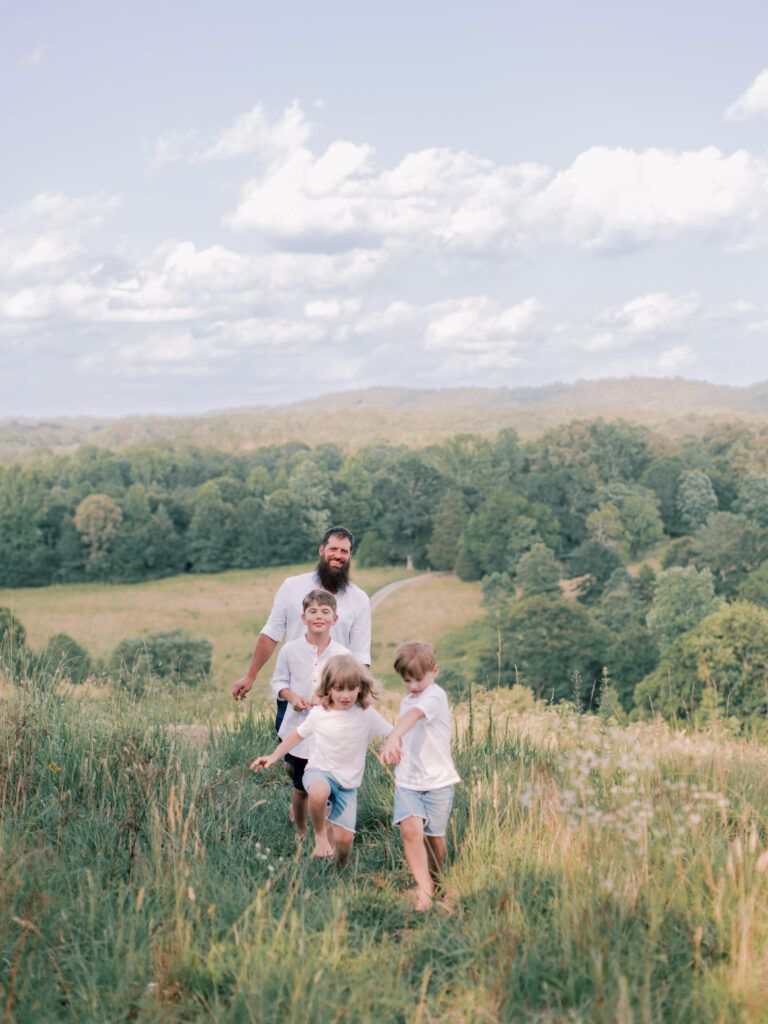
How to Choose a Photographer Who Creates Natural Family Photographs
A portfolio should show more than laughter, walking, and children being tossed into the air. Those images can be convincing when viewed one at a time, but they do not necessarily show whether a photographer can guide an entire family well.
Look more closely:
- Do the adults look comfortable as well as the children?
- Do family members appear connected, or are they simply moving?
- Are hands, posture, spacing, and light handled thoughtfully?
- Can the photographer create a strong portrait where everyone is looking?
- Do different families retain their own personalities?
- Is the work consistent across different ages, locations, and lighting conditions?
- Can you view more than a handful of isolated highlights?
- Does the photographer explain how sessions are guided?
Natural family photography should not mean receiving no direction. It should mean receiving enough skilled direction that you are no longer responsible for manufacturing the photograph yourself.
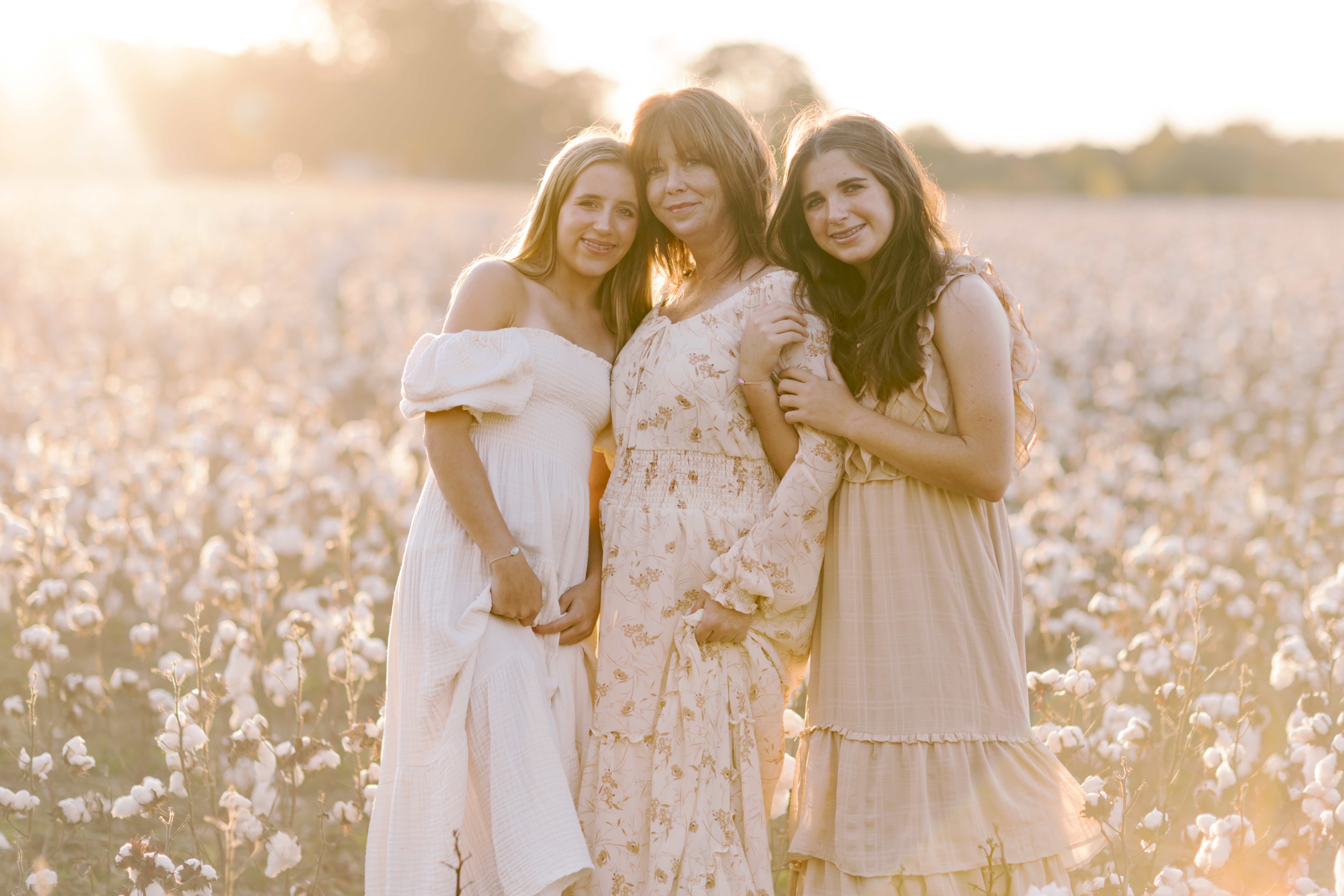
Natural Family Photographs Do Not Require a Naturally Photogenic Family
The difference between natural and awkward family photographs is rarely that one family is photogenic and another is not.
Natural photographs happen when people feel supported rather than examined. They happen when the direction is clear without becoming rigid, children are treated like children, and someone is paying attention to both the people and the picture.
That is the balance I am always looking for: enough order to create something visually refined and enough freedom for your family to remain recognizable inside it.
After 17 years of photographing people, I do not expect families to perform for me. My work is to see what is already there, shape it carefully, and know when to get out of its way.
If you are considering family photographs in Dallas, Paulding County, Northwest Georgia, or the greater Atlanta area, you can view my family photography session information or message me to begin planning your session.
Frequently Asked Questions
What if my husband or partner hates having pictures taken?
That is extremely common. Clear direction helps because no one is left wondering what to do. Your partner does not have to pretend to love being photographed. A willing hour spent with the family is enough.
Do our children have to smile and look at the camera?
No. I work toward a few photographs where everyone is looking, but the entire session does not depend on them. Movement, interaction, quieter expressions, and the ways your children naturally relate to you are equally valuable.
What should I do if my child is not cooperating?
Stay calm and remain connected to your child. Repeated requests for smiles or apologies for the behavior usually add pressure. Give me an opportunity to change the activity, pace, or expectation.
Are candid family photographs completely unposed?
Not always. Many photographs that feel candid begin with deliberate positioning, good light, and a clear prompt. The interaction may be spontaneous even though the setting was thoughtfully arranged.
Can you help us if we do not know how to pose?
Yes. You will not be expected to invent poses, determine where to stand, or monitor what your hands are doing. That is part of my job.
What if we feel awkward at the beginning?
That is normal. Most families settle in once they understand how the session works. Feeling self-conscious during the first few minutes does not mean your final photographs will look uncomfortable.


+ COMMENTS
add a comment